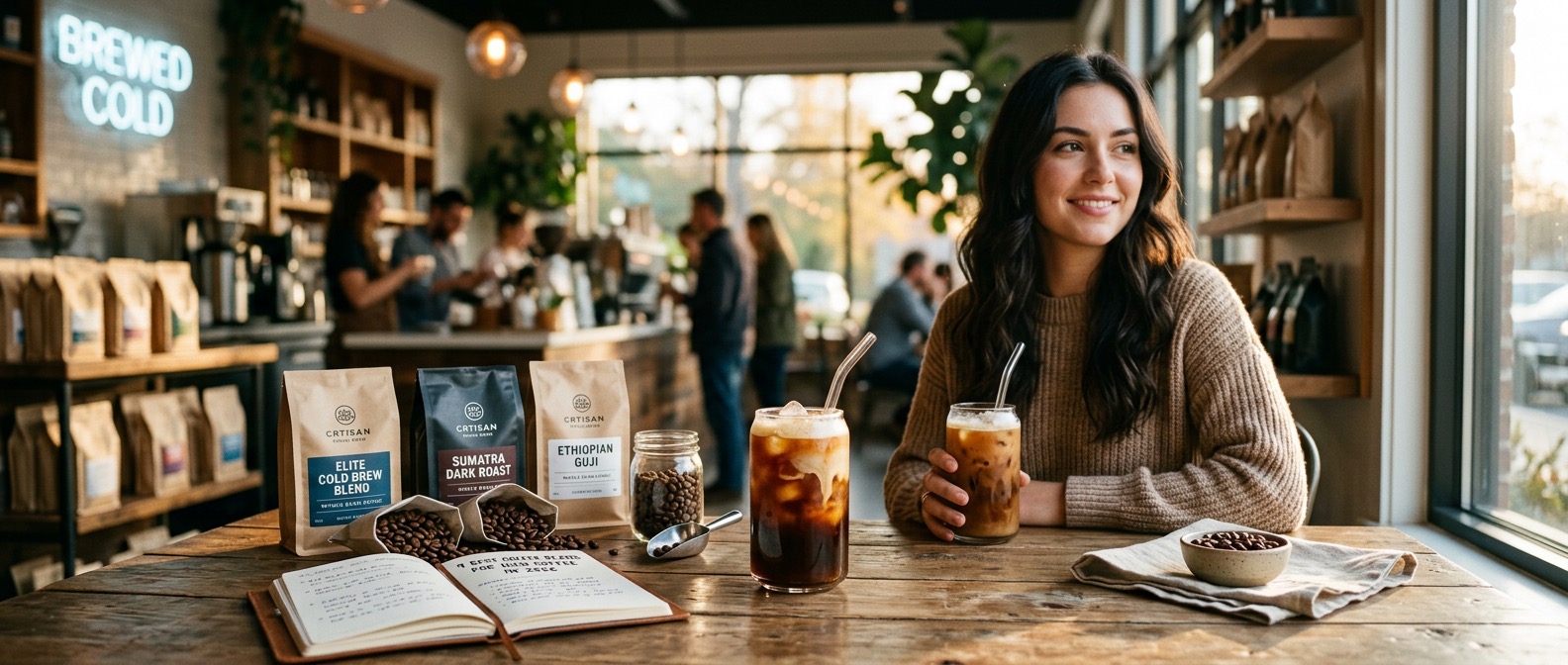
Most coffee tastes different cold. The sugars drop out, the acidity sharpens, and anything slightly over-extracted becomes undrinkable once ice dilutes it. Choosing the wrong beans is the most common reason homemade iced coffee disappoints.
The beans below work because they have the right structure for cold drinking: enough body to hold up over ice, acidity that stays pleasant when chilled, and flavors that don’t flatten out at lower temperatures.
The 9 Best Coffee Beans for Iced Coffee
1. Lavazza Super Crema — Best Overall
Lavazza Super Crema is blended specifically to remain balanced across brewing temperatures and methods. The mix of 60% Arabica and 40% Robusta gives it body and a slight bitterness that doesn’t become harsh when cold. Notes of hazelnut and almond come through clearly over ice.
This is also one of the most forgiving beans when brewing technique isn’t perfect—consistent flavor across different brew ratios makes it reliable for everyday iced coffee.
Roast: Medium-dark
Origin blend: Brazil, Colombia, Indonesia
Flavor notes: Hazelnut, almond, brown sugar
2. Stumptown Hair Bender — Best Specialty Option
Stumptown’s flagship blend is built for espresso but excels over ice. The Latin American base adds brightness; the Indonesian component adds weight. When brewed as a strong drip or cold brew concentrate and poured over ice, the result is layered—fruit and chocolate notes that come through without needing sugar.
More expensive than the other picks, but the quality justifies it for everyday specialty drinking.
Roast: Medium
Origin blend: Latin America, East Africa, Indonesia
Flavor notes: Citrus, dark chocolate, caramel
3. Peet’s Coffee Major Dickason’s Blend — Best Dark Roast
Dark roasts lose nuance but gain body—which, cold, translates to a rich, full-mouthed experience that lighter roasts can’t replicate. Major Dickason’s is Peet’s signature dark roast, developed over decades. Low acidity (which spikes when cold) and a natural sweetness make it work better over ice than most dark roasts.
If you add milk or cream to your iced coffee, this is the pick. The bold base holds up through dilution.
Roast: Dark
Origin blend: Proprietary multi-origin
Flavor notes: Rich, complex, full body with low acidity
4. Illy Classico Espresso — Best Italian-Style
Italian roasters optimize for espresso, which means they’re optimizing for body and crema—both of which translate well cold. Illy Classico uses 9 Arabica varieties selected for balance. The result is smooth, not sharp, which means it doesn’t develop edge when chilled.
The beans come in a pressurized can that preserves freshness better than standard bags. Worth noting for anyone who doesn’t go through coffee quickly.
Roast: Medium
Origin blend: 9 Arabica origins
Flavor notes: Caramel, chocolate, jasmine
5. Death Wish Coffee — Best High-Caffeine Option
Death Wish uses a blend of Robusta and Arabica beans, high-pressure roasted to amplify caffeine without maximizing bitterness. The claim of “world’s strongest coffee” is marketing, but the caffeine content is real—roughly double a standard cup.
Over ice, the bold flavor profile holds up well. Not the most nuanced cup, but if you want iced coffee that actually wakes you up, it delivers.
Roast: Dark
Origin blend: Robusta/Arabica
Flavor notes: Cherry, chocolate, intense body
6. Caribou Coffee Caribou Blend — Best Everyday Value
A medium-roast blend that covers the basics without asking too much from your technique or wallet. The malt and berry notes are subtle but present, and the body is substantial enough to remain satisfying cold. Widely available, consistently roasted, easy to find on sale.
For anyone who drinks iced coffee daily and doesn’t want to overthink it, this is a reliable default.
Roast: Medium
Origin blend: Central and South American
Flavor notes: Milk chocolate, malt, light berry
7. Koffee Kult Dark Roast — Best for Cold Brew
Cold brew requires long extraction time (12–24 hours), which means bitter compounds from over-roasted beans have time to fully leach into the water. Koffee Kult’s dark roast avoids this with smooth, non-charred beans that produce low-acidity cold brew concentrate.
The cinnamon and chocolate notes survive cold extraction better than most dark roasts. Grind coarse, steep 18 hours, dilute 1:1, pour over ice.
Roast: Dark
Origin blend: Colombia, Guatemala, Sumatra
Flavor notes: Cinnamon, caramel, chocolate, low acidity
8. Intelligentsia Black Cat Espresso — Best Light Roast Pick
Light roasts are tricky cold—their bright acidity can become sharp and their body is thinner. Black Cat is one of the rare light roasts that works. The seasonal blend is calibrated for clarity: distinct fruit notes, clean finish, no harsh aftertaste when chilled.
This works best brewed as flash-chilled espresso (brew directly over ice) rather than drip-then-chill.
Roast: Light-medium
Origin blend: Varies seasonally
Flavor notes: Fruit-forward, bright, clean
9. Eight O’Clock Original Blend — Best Budget Pick
Eight O’Clock has been around since 1859. The Original Blend is inexpensive, widely available, and consistently roasted. It’s not a specialty coffee—but it’s clean, balanced, and tastes exactly like iced coffee is supposed to taste when you just want something cold and caffeinated without spending $18 per bag.
Roast: Medium
Origin blend: Central and South American
Flavor notes: Balanced, mild, classic
Does Roast Level Matter for Iced Coffee?
Yes—but not the way most guides frame it.
The common advice is “use dark roast for iced coffee because it’s stronger.” The actual reason dark roasts work: lower acidity. Cold temperatures sharpen perceived acidity, which is why light roasts can taste sour when chilled. Dark roasts have had most of their acids degraded in the roasting process, so they remain smooth cold.
The trade-off is complexity. Dark roasts are bolder but more one-dimensional. If you want nuanced flavor in your iced coffee, choose a medium roast from a quality roaster and brew it strong to compensate for ice dilution.
Brewing Methods for Iced Coffee
Flash-chilled espresso: Pull a double shot directly over a glass of ice. The ice chills the shot immediately, locking in flavor before oxidation occurs. Best method for quality.
Iced drip: Brew at 1.5x your normal strength, pour over ice immediately. Don’t let brewed coffee sit at room temperature before chilling—it oxidizes and tastes stale.
Cold brew: Coarse grind, room-temperature water, 12–24 hours steeping, filter, dilute to taste. Least acidic result, most forgiving of bean quality.
Japanese iced pour-over: Weigh your recipe so half the brew water is ice in the carafe. Pour hot water over grounds; the brewed coffee drips directly onto ice. Produces bright, clear iced coffee in minutes.
Grind Fresh If You Can
Pre-ground coffee goes stale within days of opening. For iced coffee, stale beans produce a flat, papery cup that no amount of ice or milk fixes. A basic burr grinder—even a $40 hand grinder—makes a noticeable difference. If you’re buying whole beans, grind immediately before brewing.
The Bottom Line
For most people, Lavazza Super Crema is the starting point: consistent, balanced, available anywhere, and genuinely good cold. If you’re making cold brew specifically, Koffee Kult Dark Roast produces the smoothest concentrate. And if you want the best cup and budget isn’t the constraint, Stumptown Hair Bender is what specialty coffee tastes like over ice.
Related: Best Cold Brew Coffee Maker · Best Espresso Machine Under $200
Editorial
The coffeegare team tests and reviews coffee gear to help you brew better coffee at home. Every recommendation is based on real use, not spec sheets.